Herb reference entry
Sour Jujube Seed / Spine Date Seed / Ziziphus Seed
Sour Jujube Seed / Spine Date Seed / Ziziphus Seed
Ziziphus jujuba Mill. var. spinosa (Bunge) Hu ex H.F.Chow
Reviewed by Kuda, September 2, 2026 - Editorial policy
OVERVIEW
What This Record Covers
Sour Jujube Seed, called Suan Zao Ren, is the dried seed of Ziziphus jujuba var. spinosa, the wild sour jujube, a thorny shrub of the buckthorn family (Rhamnaceae) that grows on dry slopes across northern China. The medicinal material is the flattened, reddish-brown, hard seed with a characteristic split seam, harvested, cleaned, and dried for use. In trade it appears as whole seeds, crushed seeds, powders, granules, and sleep supplements. The fruit flesh, the seed, and the roasted seed are separate product forms, and the seed rather than the fruit is the materia medica record.
- English name
- Sour Jujube Seed / Spine Date Seed / Ziziphus Seed
- Latin name
- Ziziphus jujuba Mill. var. spinosa (Bunge) Hu ex H.F.Chow
- Traditional category
- Mind Calming
- Nature
- Neutral
- Flavor description
- Sweet, Sour
- Record identifier
- suanzaoren
IDENTIFICATION
Identification and Image Notes
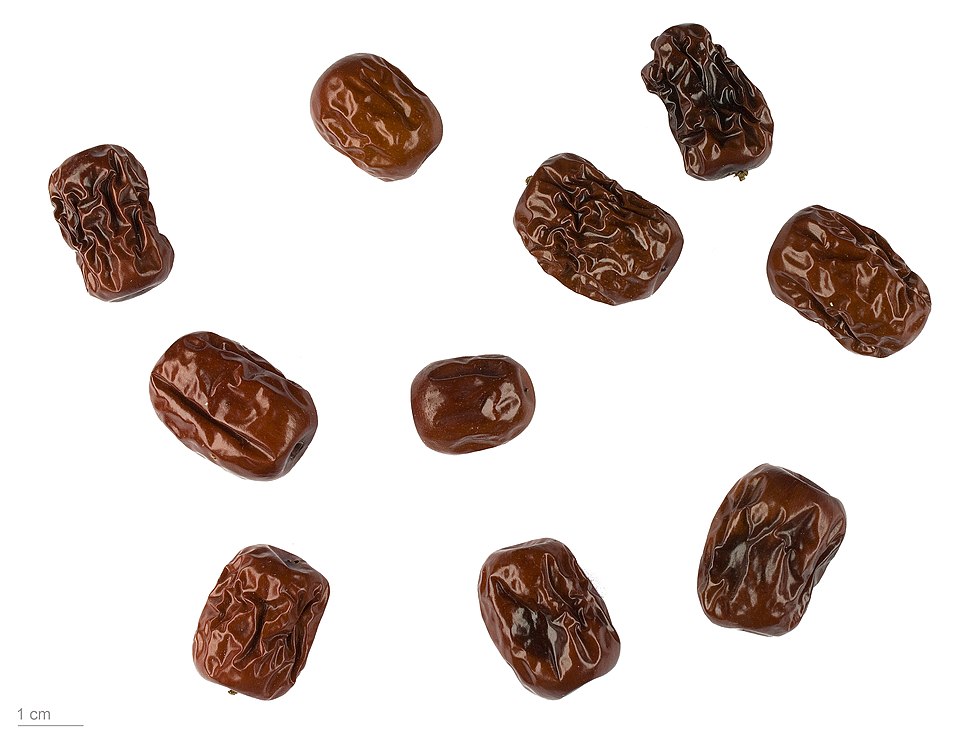
The seeds are flattened, reddish-brown, and hard, with a characteristic split seam, and fruit flesh, seed, and roasted seed are separate product forms. The seed is about the size of a pea, glossy and dark red-brown, and it is harder than most other materia medica seeds. The hard flattened seed is distinctive, but the species and the processed form should be confirmed with the label, and stir-fried and raw seeds should be recorded separately.
Images are for orientation only, not definitive species authentication; confirm species, part, source, and labeling with a qualified professional or authoritative monograph.
TRADITIONAL CONTEXT
Traditional Use in Context
Traditional records discuss Sour Jujube Seed for heart and liver nourishment, sleep, irritability, and spontaneous sweating language, and it is the central ingredient of the classical sleep formula Suan Zao Ren Tang, where it is paired with Poria, Sichuan Lovage, Anemarrhena, and Licorice. Classical texts describe it for restless sleep and for sweating during sleep, always within a pattern-based framework. The calming vocabulary is historical and does not establish the cause of insomnia or mood change, and persistent sleep problems, daytime sleepiness, or mood disturbance deserve clinical assessment rather than self-treatment.
PROCESSING CONTEXT
Raw Material, Processing, and Product Form
Seeds may be used raw or stir-fried, and roasting changes aroma and traditional emphasis, while powders and sleep supplements may add sedating ingredients. Each form should be reviewed for its full ingredient list.
The same name can cover a raw material, decoction piece, powder, extract, or finished product, so record the labeled form rather than assuming it; see the safety review for the questions to ask.
SAFETY REVIEW
Safety Boundaries
Review sedation, driving, alcohol, sleep medicines, pregnancy, allergy, and persistent insomnia or mood changes, and check the complete ingredients of any combined sleep product. A traditional calming description does not establish a cause or treatment, and this page is educational and is not a dose recommendation.
This record is not a dose recommendation; risk depends on identity, preparation, amount, duration, contamination, other medicines, and health conditions — a traditional or “natural” label cannot establish safety. For the full framework, read the Chinese Herbal Medicine Safety Review.
COMPARISON
How This Entry Differs
Compare Sour Jujube Seed with Polygala Root and Longan Aril for calming language, plant part, richness, and sedation concerns. Sour Jujube Seed is the hard seed of a wild shrub and the most frequently used calming ingredient of the three.
Use the related-entry links below to compare identity, part, processing, and safety boundaries — similar categories do not make materials interchangeable.
STUDY METHOD
New to these entries?
Read the four-step method in How to Read a Herb Entry before comparing materials.