Herb reference entry
Abalone Shell / Sea-ear Shell
Abalone Shell / Sea-ear Shell
Haliotis diversicolor Reeve
Reviewed by Kuda, September 2, 2026 - Editorial policy
OVERVIEW
What This Record Covers
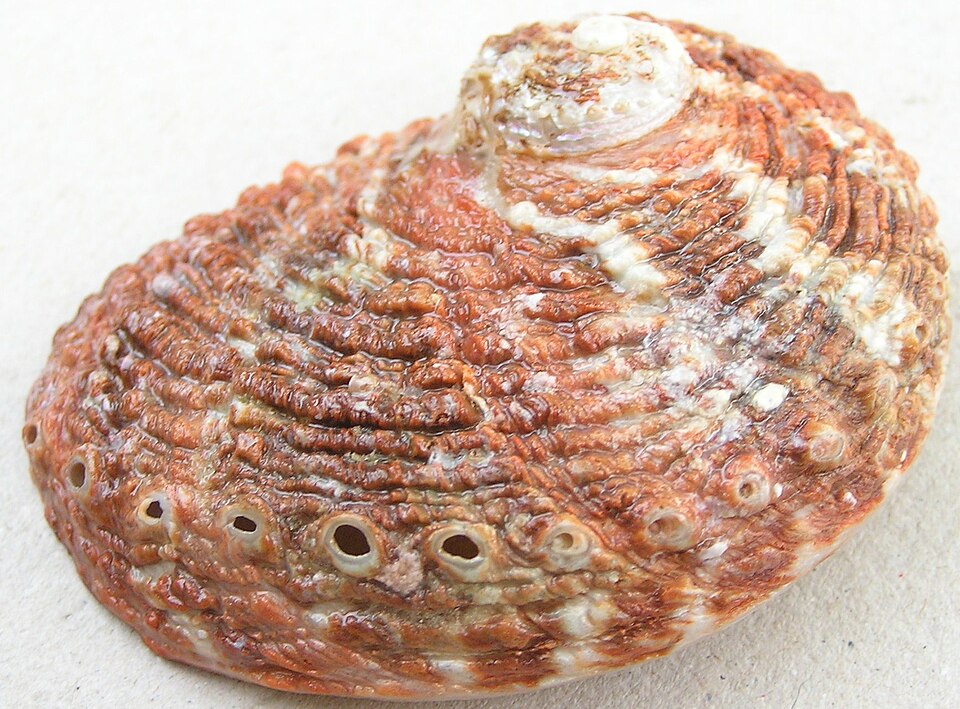
Abalone Shell, called Shi Jue Ming, is the cleaned and calcined shell of selected Haliotis species, including Haliotis diversicolor, marine snails known as abalones that live attached to rocks in coastal waters of East Asia. The medicinal material is the hard, iridescent, ear-shaped shell with a row of open holes along one edge, washed, dried, and often calcined before being ground. In trade it appears as broken shell pieces, raw or calcined powder, and combined formulas, and it is not a plant material. Species, shell cleanliness, and mineral contaminants should be documented with the product.
- English name
- Abalone Shell / Sea-ear Shell
- Latin name
- Haliotis diversicolor Reeve
- Traditional category
- Liver Pacifying
- Nature
- Cold
- Flavor description
- Salty
- Record identifier
- shijueming
IDENTIFICATION
Identification and Image Notes
Abalone Shell is a hard, iridescent marine shell with a row of open holes along one edge, and it is not a plant material. The iridescent inner surface and the row of holes distinguish abalone shells from other marine shells, and fragments of the raw shell are thick and heavy. Species, shell cleanliness, and mineral contaminants should be documented, and calcined powder should be kept separate from raw broken shell in any product record.
Images are for orientation only, not definitive species authentication; confirm species, part, source, and labeling with a qualified professional or authoritative monograph.
TRADITIONAL CONTEXT
Traditional Use in Context
Traditional records discuss Abalone Shell for liver-yang, eye, vision, and anchoring language, and it appears in classical formulas aimed at dizziness, headache, and eye-related presentations read as upward liver-yang, such as Tian Ma Gou Teng Yin and Zhen Gan Xi Feng Tang. Classical texts describe it for anchoring rising yang and supporting the eyes, always within a pattern-based framework. The eye and anchoring vocabulary is historical, and eye changes, double vision, or a severe or sudden headache requires ordinary clinical assessment rather than a traditional label. Dizziness with neurological signs is a reason for urgent evaluation, not a home-treatment target.
PROCESSING CONTEXT
Raw Material, Processing, and Product Form
Shells are washed, dried, and often calcined before being ground, and raw shell, calcined powder, and calcium-containing supplements are different products. Each form carries its own quality and exposure record.
The same name can cover a raw material, decoction piece, powder, extract, or finished product, so record the labeled form rather than assuming it; see the safety review for the questions to ask.
SAFETY REVIEW
Safety Boundaries
Review shellfish allergy, kidney disease, mineral restrictions, pregnancy, and the risk of inhaling fine powder, and check the calcium and mineral content of any supplement. Eye changes or severe headache need ordinary clinical assessment, and this page is educational and is not a dose recommendation.
This record is not a dose recommendation; risk depends on identity, preparation, amount, duration, contamination, other medicines, and health conditions — a traditional or “natural” label cannot establish safety. For the full framework, read the Chinese Herbal Medicine Safety Review.
COMPARISON
How This Entry Differs
Compare Abalone Shell with Gastrodia Rhizome and Uncaria Stem for liver-yang language, but keep the animal source, mineral form, and processing separate. Abalone Shell is the only mineral-based material of the three.
Use the related-entry links below to compare identity, part, processing, and safety boundaries — similar categories do not make materials interchangeable.
STUDY METHOD
New to these entries?
Read the four-step method in How to Read a Herb Entry before comparing materials.