Herb reference entry
Dried Ginger Rhizome
Dried Ginger Rhizome
Zingiber officinale Roscoe
Reviewed by Kuda, September 2, 2026 - Editorial policy
OVERVIEW
What This Record Covers
Dried Ginger, called Gan Jiang, is the dried rhizome of Zingiber officinale, the same plant that produces fresh ginger, a perennial herb of the ginger family (Zingiberaceae) cultivated across warm regions of Asia. The medicinal material is the branched, fibrous rhizome, which is cleaned and dried to a pale brown, pungent form. In trade it appears as dried rhizome slices, powder, granules, and combined formulas, and fresh ginger, dried ginger, ginger peel, and ginger extract are different forms. The drying process intensifies the pungency and changes the traditional description, so the form should be stated on the label.
- English name
- Dried Ginger Rhizome
- Latin name
- Zingiber officinale Roscoe
- Traditional category
- Interior Warming
- Nature
- Hot
- Flavor description
- Pungent
- Record identifier
- ganjiang
IDENTIFICATION
Identification and Image Notes
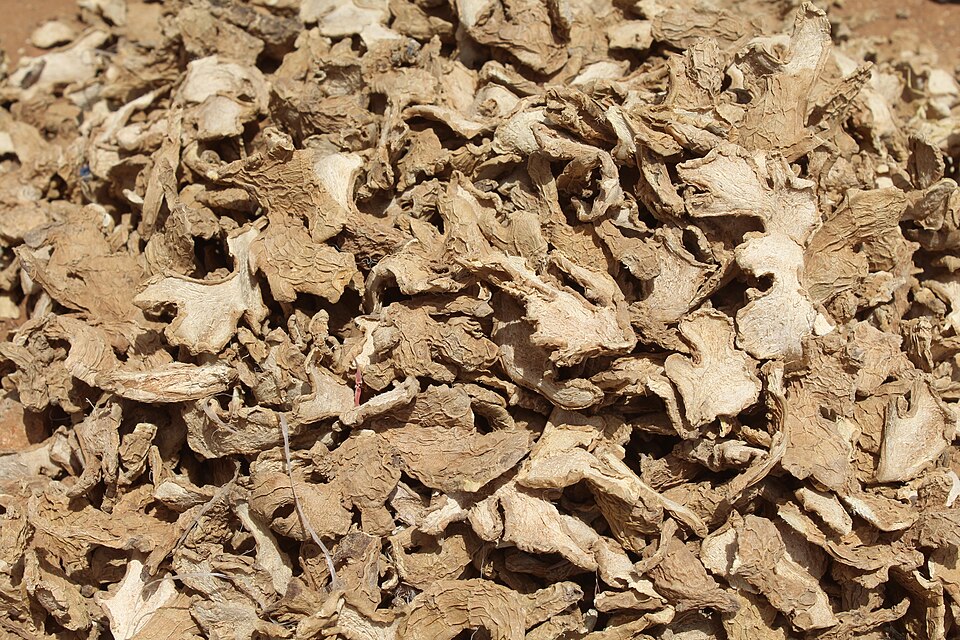
The rhizome is branched and fibrous with a pungent aroma and yellow interior, and fresh ginger, dried ginger, ginger peel, and ginger extract are different forms. The dried rhizome is hard, pale brown, and fibrous, with a pungent smell and a warming, sharp taste that is stronger than fresh ginger. The dried form is paler and more fibrous than fresh ginger, and the label should state which form is present, since the fresh and dried materials are separate records.
Images are for orientation only, not definitive species authentication; confirm species, part, source, and labeling with a qualified professional or authoritative monograph.
TRADITIONAL CONTEXT
Traditional Use in Context
Traditional records discuss Dried Ginger for warming the interior, restoring digestive fire, warming the lungs, and directing cold-related qi, and it is a classic ingredient of formulas such as Li Zhong Wan for digestive cold and Si Ni Tang with Prepared Aconite for collapse-related cold, where it is paired with Liquorice. Classical texts describe it for interior cold with digestive symptoms and for warming the lungs, always within a pattern-based framework, and the dried rhizome is read as warmer and more interior-directed than fresh ginger. The warming vocabulary is historical, and severe abdominal pain or vomiting should not be reduced to a cold label without medical assessment. Vomiting with blood, severe pain, or signs of dehydration needs urgent evaluation.
PROCESSING CONTEXT
Raw Material, Processing, and Product Form
Fresh rhizome is cleaned and dried to produce the recorded material, and frying or carbonizing creates further forms, while heat and storage change aroma and quality. Each processed form carries a different traditional emphasis.
The same name can cover a raw material, decoction piece, powder, extract, or finished product, so record the labeled form rather than assuming it; see the safety review for the questions to ask.
SAFETY REVIEW
Safety Boundaries
Review reflux, bleeding, gallbladder disease, pregnancy, anticoagulants, and concentrated ginger products, and check for interactions with blood-thinning medicines. Severe abdominal pain or vomiting should not be reduced to a cold label, and persistent symptoms require medical assessment.
This record is not a dose recommendation; risk depends on identity, preparation, amount, duration, contamination, other medicines, and health conditions — a traditional or “natural” label cannot establish safety. For the full framework, read the Chinese Herbal Medicine Safety Review.
COMPARISON
How This Entry Differs
Compare Dried Ginger with Cinnamon Bark and Cassia Twig for warming intensity, plant part, culinary overlap, and bleeding or reflux concerns. Dried Ginger is the rhizome of a familiar kitchen plant, which makes its concentrated forms easy to underestimate. Fresh ginger, dried ginger, and the carbonized form are three separate records that should never be merged into one product description.
Use the related-entry links below to compare identity, part, processing, and safety boundaries — similar categories do not make materials interchangeable.
STUDY METHOD
New to these entries?
Read the four-step method in How to Read a Herb Entry before comparing materials.