Herb reference entry
Anemarrhena Rhizome
Anemarrhena Rhizome
Anemarrhena asphodeloides Bunge
Reviewed by Kuda, September 2, 2026 - Editorial policy
OVERVIEW
What This Record Covers
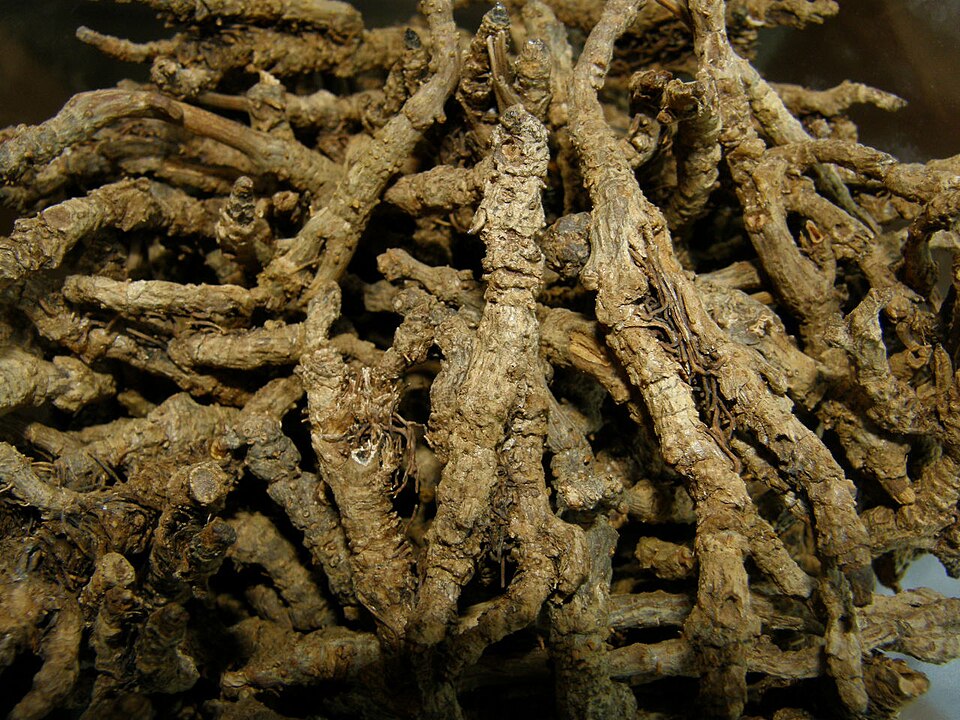
Anemarrhena Rhizome, called Zhi Mu, is the dried rhizome of Anemarrhena asphodeloides, a perennial herb of the asparagus family (Asparagaceae) that grows in dry grasslands and rocky slopes of northern China and Mongolia. The medicinal part is the long, knotted underground rhizome, covered with brown scale-like leaf bases, which is dug, cleaned, and dried for use as slices. In trade it appears as rhizome slices, powders, granules, and combined formulas. Because the rhizome is pale and bitter, and related rhizomes can look similar, the species confirmation and the slice form should accompany any product.
- English name
- Anemarrhena Rhizome
- Latin name
- Anemarrhena asphodeloides Bunge
- Traditional category
- Heat Clearing
- Nature
- Cold
- Flavor description
- Bitter, Sweet
- Record identifier
- zhimu
IDENTIFICATION
Identification and Image Notes
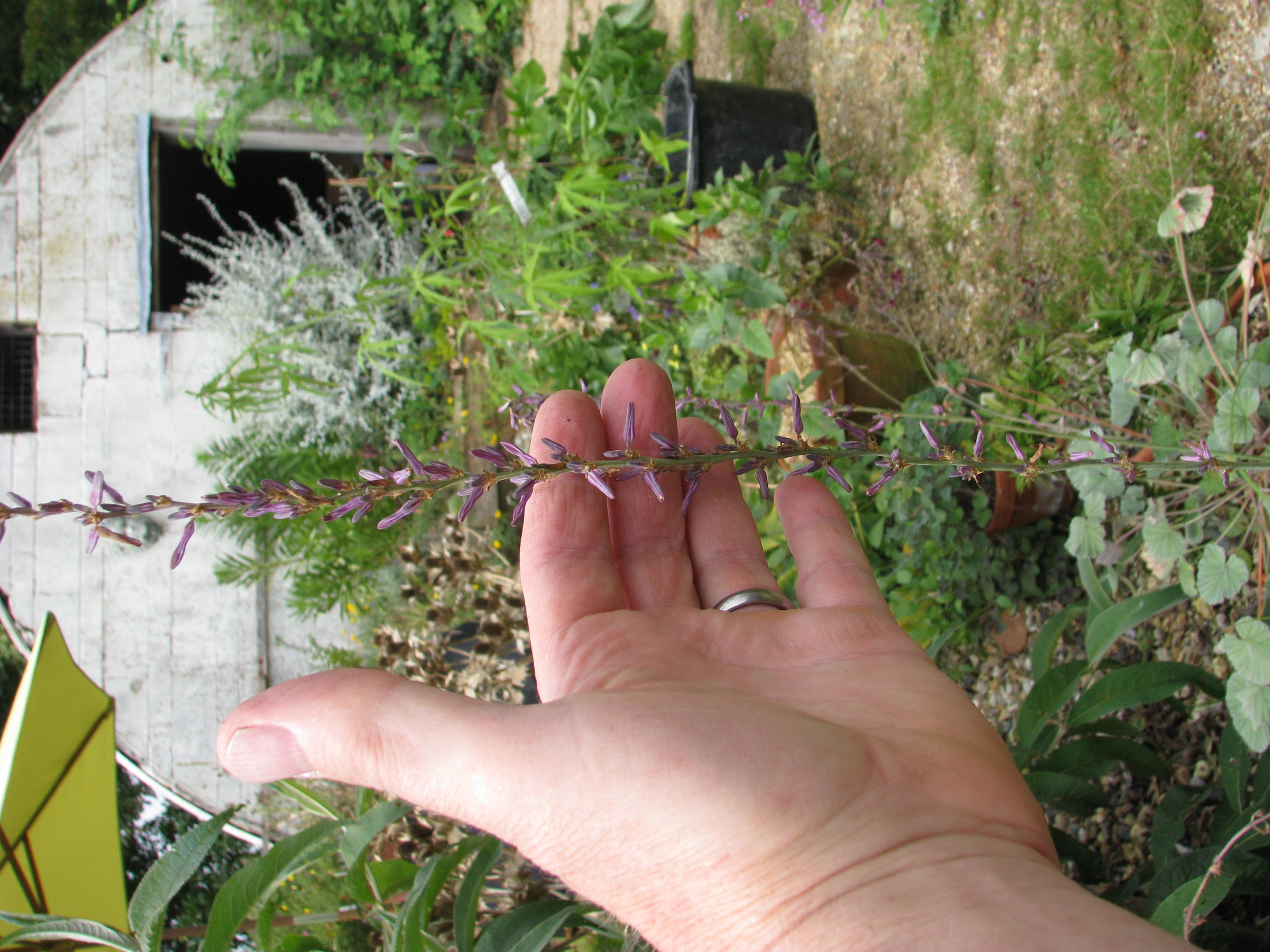
The rhizome is long, knotted, and covered with brown scale-like leaf bases, and a bitter taste and pale interior orient the review, but species confirmation is still required. The dried rhizome is slender and twisted, with overlapping scale remnants along the surface and a pale, slightly translucent interior, and the cross-section shows a soft, fleshy core. The dried slices are pale and firm, and related asparagus-family rhizomes can look similar, so the Latin name should be confirmed with the label, and salt-processed slices should be recorded separately from the raw material.
Images are for orientation only, not definitive species authentication; confirm species, part, source, and labeling with a qualified professional or authoritative monograph.
TRADITIONAL CONTEXT
Traditional Use in Context
Traditional records discuss Anemarrhena for strong heat clearing with yin and fluid support, fever, thirst, and lung or kidney-related historical language, and it is a classic ingredient in formulas aimed at heat with fluid depletion, such as Bai Hu Tang with Gypsum and Liquorice, and in the kidney-yin formula Zhi Bai Di Huang Wan with Amur Cork Bark. Classical texts describe it for fever, thirst, and dry presentations, always within a pattern-based framework. The fever and thirst vocabulary is historical, and persistent fever or dehydration requires medical care rather than repeated cooling herbs, especially in children and older adults.
PROCESSING CONTEXT
Raw Material, Processing, and Product Form
Raw rhizome and salt-processed rhizome are described separately, and processing, moisture protection, and the difference between slice and extract should be written on the product record. The two processed forms are not interchangeable in a traditional comparison.
The same name can cover a raw material, decoction piece, powder, extract, or finished product, so record the labeled form rather than assuming it; see the safety review for the questions to ask.
SAFETY REVIEW
Safety Boundaries
Review diarrhea, poor appetite, cold sensitivity, pregnancy, and products with other cooling ingredients, and check for interactions with medicines affecting blood sugar or fluid balance. Persistent fever or dehydration needs medical care rather than self-treatment with cooling herbs, and this page is educational and is not a dose recommendation.
This record is not a dose recommendation; risk depends on identity, preparation, amount, duration, contamination, other medicines, and health conditions — a traditional or “natural” label cannot establish safety. For the full framework, read the Chinese Herbal Medicine Safety Review.
COMPARISON
How This Entry Differs
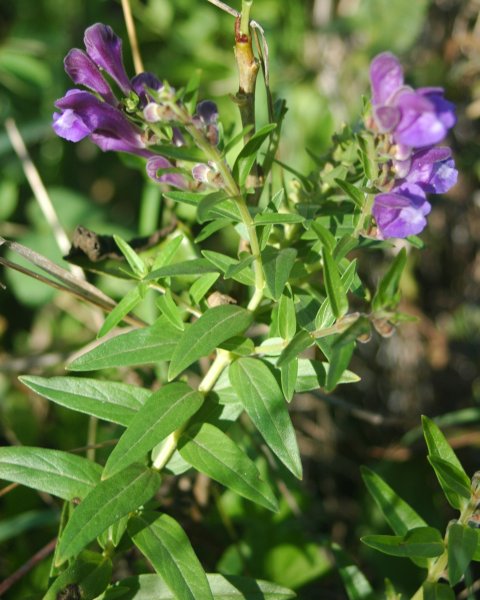
Compare Anemarrhena Rhizome with Baical Skullcap Root for the bitter-cold pair, and with Dwarf Lilyturf Root for the shift from clearing toward fluid nourishment. Anemarrhena sits between the two: bitter and cooling, yet paired in classical formulas with moistening roots. In the classical grouping it appears where cooling must not dry the fluids, a boundary that the other bitter-cold roots do not share. Its long, scale-covered rhizome is also easy to distinguish from the cylindrical roots of the other two once the form is checked.
Use the related-entry links below to compare identity, part, processing, and safety boundaries — similar categories do not make materials interchangeable.
STUDY METHOD
New to these entries?
Read the four-step method in How to Read a Herb Entry before comparing materials.